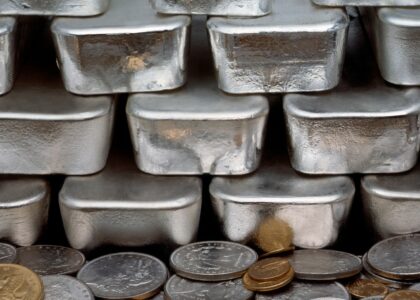

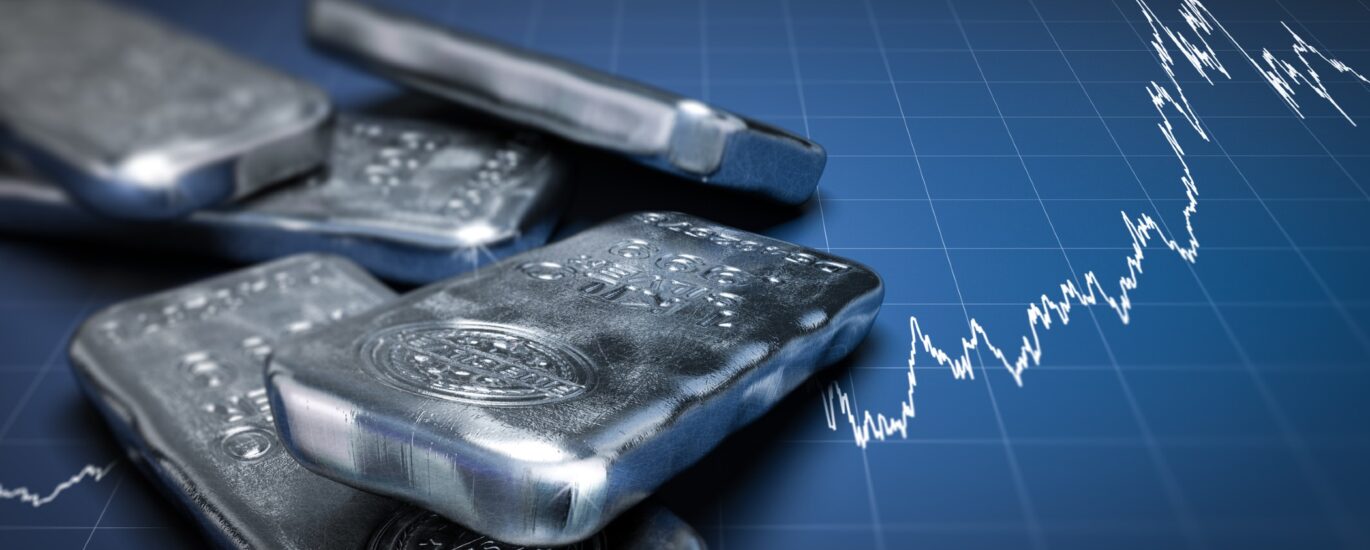
For most of modern history, silver has lived in the long, glittering shadow of gold. Gold got the headlines, the central bank vaults, and the dramatic movie plots about heists. Silver, meanwhile, was the metal that ended up in your grandma’s tea set and occasionally in a pirate’s treasure chest.
But somewhere along the way, silver pulled off one of the greatest career pivots in commodity history.
It went from “nice shiny thing” to “critical component of the modern technological civilization.”
And now, heading into 2026 and 2027, the world suddenly needs a lot of it. Possibly more than we can easily dig out of the ground. Which is awkward.
Let’s take a look at where silver demand is headed over the next two years—and why this humble metal might be having the best midlife crisis in the entire periodic table.
The Short Version: Everyone Suddenly Needs Silver
The global silver market has a simple problem.
Everyone wants silver.
Not just investors who like shiny things. Not just jewelry buyers. But also:
- Solar panel manufacturers
- Electric vehicle companies
- Semiconductor producers
- AI data center builders
- Medical equipment makers
- Electronics manufacturers
In other words, pretty much the entire modern economy.
Global silver demand in recent years has been hovering around 1.2 to 1.3 billion ounces annually, and projections suggest demand could climb even higher through 2026 and 2027.
That’s great news if you like silver.
It’s slightly less great if you are responsible for actually mining the stuff.
Solar Panels: The Silver Vacuum Cleaner
Let’s start with the biggest and most enthusiastic consumer of silver: the solar industry.
Solar panels use silver paste to conduct electricity out of photovoltaic cells. Without it, the panels would be about as useful as a chocolate teapot.
And the world is building solar farms like it’s trying to power a small star.
Governments everywhere—from the United States to Europe to China—have decided that renewable energy is the future. Solar installations have been growing at breathtaking speed, and that growth shows no signs of slowing down.
By 2026 and 2027, solar power deployment is expected to continue breaking records.
Which means one thing:
The solar industry will keep eating silver like it’s at an all-you-can-eat buffet.
Recent estimates suggest that solar manufacturing could consume 200–230 million ounces of silver per year over the next couple of years.
For context, that’s roughly one-fifth of the entire global silver supply.
Not bad for a metal that used to mostly sit in cutlery drawers.
Electric Vehicles: The Rolling Silver Collection
Next up: electric vehicles.
EVs are essentially computers on wheels with very large batteries attached. And computers, as it turns out, love silver.
Silver’s incredible electrical conductivity makes it ideal for high-performance circuits, switches, and connectors. EVs use silver in:
- battery management systems
- power electronics
- sensors
- charging systems
Compared with traditional gasoline vehicles, electric vehicles use two to three times more silver per car.
Which would be fine if the world planned to build a modest number of EVs.
Instead, the global auto industry has decided to build tens of millions of them.
Automakers are racing to electrify their fleets, governments are pushing aggressive emissions targets, and consumers are slowly warming to the idea of plugging their cars into walls.
As EV production ramps up in 2026 and 2027, silver demand from the automotive sector could exceed 100 million ounces annually.
If cars could talk, they would probably apologize for using so much silver.
But they can’t.
So they won’t.
Electronics: The Quiet Giant
While solar panels and EVs get most of the headlines, the electronics industry remains one of silver’s biggest and most consistent customers.
Every smartphone, laptop, television, and gaming console contains small amounts of silver in circuit boards and connectors.
Individually, the amounts are tiny.
Collectively, they add up to hundreds of millions of ounces per year.
The growth of new technologies will likely increase this demand further. Consider:
- artificial intelligence hardware
- cloud computing infrastructure
- data centers
- 5G networks
- advanced robotics
All of these systems rely on high-performance electrical components. And when engineers want the best electrical conductor available, silver is usually at the top of the list.
So while the world argues about the dangers of AI taking over humanity, one thing is clear:
AI is definitely taking over the silver supply chain.
AI Data Centers: The Unexpected Silver Hog
Speaking of AI, let’s talk about data centers.
Artificial intelligence is not just software. It runs on massive computing infrastructure filled with high-performance chips, networking hardware, and power systems.
And those systems require a lot of electricity.
Which means they require a lot of conductive materials.
Which means—surprise!—they require silver.
As technology companies build ever larger AI clusters, the demand for high-performance electronics will continue to grow. The silver used in these systems may not be as visible as solar panels, but it’s quietly becoming another important source of industrial demand.
If AI eventually becomes self-aware, it may discover something interesting.
Its entire existence depends on a shiny metal humans once used to make spoons.
Jewelry and Silverware: The Original Customers
While industry has taken over much of the market, jewelry and silverware still represent a significant portion of global silver demand.
Countries like India, China, and parts of Southeast Asia have long traditions of silver jewelry and decorative objects. In many regions, silver serves as an accessible alternative to gold.
Demand in this segment tends to rise when incomes grow and fall when economies slow down.
But even with fluctuations, jewelry demand is expected to remain strong through 2026 and 2027.
Which means silver still gets to enjoy its original job:
Looking fabulous.
Investment Demand: Humans Love Shiny Things
Of course, we cannot discuss silver without talking about investors.
Humans have an almost irrational attraction to shiny metals. Economists may debate interest rates, inflation, and currency stability, but deep down many investors simply like owning something that sparkles.
Silver coins and bars remain popular among retail investors who want a tangible store of value. Exchange-traded funds and futures markets also attract institutional capital during periods of economic uncertainty.
If inflation fears rise, stock markets wobble, or central banks start printing money like there’s no tomorrow, investment demand for silver could surge again.
And when investors start piling into silver, prices tend to move quickly.
Very quickly.
Silver has a reputation for dramatic price swings, and it works hard to maintain that reputation.
The Supply Side: A Slight Problem
Now comes the slightly awkward part of the story.
Demand for silver is growing.
Supply… not so much.
Unlike gold, most silver is produced as a byproduct of mining other metals like copper, lead, and zinc. That means silver production is often determined by the economics of those other metals rather than silver itself.
Even if silver prices rise dramatically, mining companies cannot instantly increase supply.
Opening new mines takes years—sometimes decades.
So while demand is climbing thanks to solar panels, EVs, electronics, and investors hoarding shiny bars in their basements, the supply response may remain relatively slow.
This has already led to multiple years of global silver deficits, where demand exceeds annual production.
Think of it like a restaurant that suddenly becomes wildly popular but only has one chef.
Eventually, people start lining up outside.
Estimated Demand for 2026 and 2027
So where does all this leave us?
Most projections suggest global silver demand could approach 1.3 to 1.4 billion ounces annually by 2026 and 2027.
Here’s a rough breakdown of what that demand might look like:
Industrial demand
Approximately 700–750 million ounces
Solar industry
Around 220–250 million ounces
Electronics and technology
Roughly 300 million ounces
Electric vehicles and automotive
Potentially 100+ million ounces
Jewelry and silverware
Around 200 million ounces
Investment demand
Highly variable but potentially 200 million ounces or more
Of course, these numbers will shift depending on economic conditions, technological changes, and investor behavior.
But the overall direction is clear.
The world wants more silver.
A lot more.
The Big Picture
The silver market is undergoing a fascinating transformation.
For centuries, silver was primarily valued as money and decoration. Today it has become an essential industrial material powering some of the most important technologies on Earth.
Solar energy. Electric transportation. Artificial intelligence. Advanced electronics.
All of them rely—at least in part—on silver.
This convergence of technological demand and monetary appeal makes silver one of the most unique commodities in the global economy.
It is both a critical industrial input and a traditional store of value.
Very few assets can claim that combination.
Final Thoughts: Silver’s Accidental Success Story
If silver were a person, its life story would be hilarious.
For thousands of years it played second fiddle to gold.
Then one day humanity decided to electrify everything, build millions of solar panels, create artificial intelligence, and replace gasoline cars with electric ones.
Suddenly everyone looked around and said:
“Wait… don’t we need a lot of silver for that?”
Yes.
Yes we do.
So as we head into 2026 and 2027, silver demand appears poised to remain strong across multiple industries.
Whether the mining industry can keep up is another question entirely.
But one thing is certain.
The quiet metal that once spent centuries polishing tea sets has now become one of the most important resources of the technological age.
And if silver could talk, it would probably say something like:
“Took you long enough to notice.”