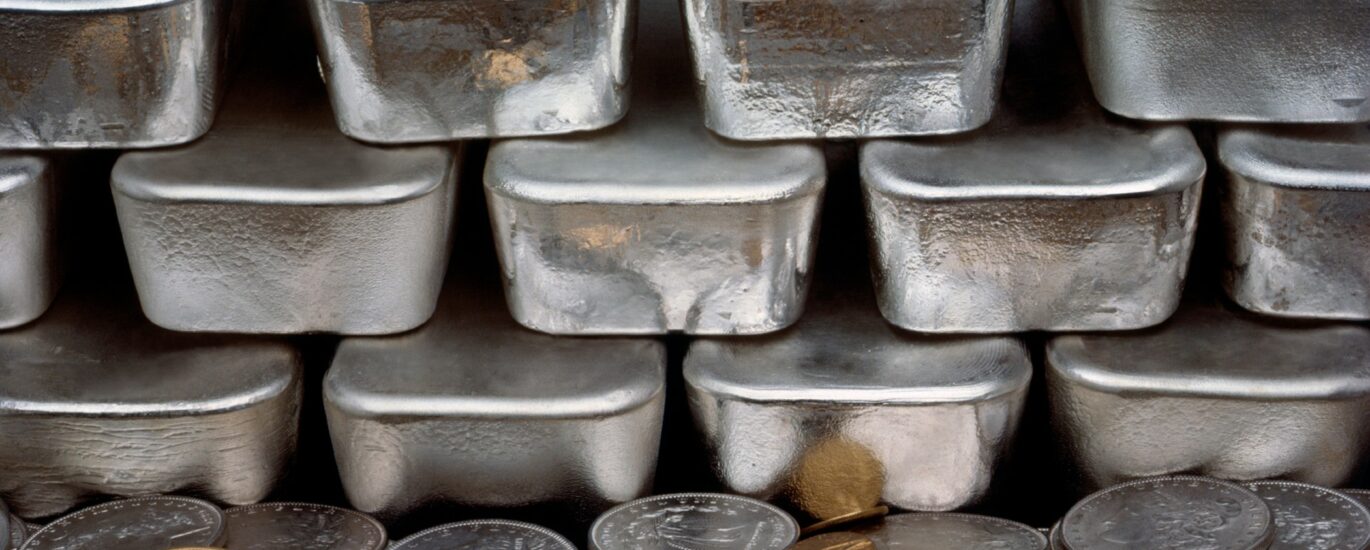
The global silver market has entered one of the most dynamic periods in its modern history. Once viewed primarily as a precious metal used in jewelry and coins, silver has evolved into a hybrid asset—part monetary hedge, part critical industrial material. This dual identity has created a complex market structure where geopolitical developments, industrial growth, financial markets, and supply constraints all interact to shape price discovery.
As of 2026, silver sits at the intersection of several powerful macroeconomic and technological trends: the global transition to clean energy, rising geopolitical tensions, supply deficits across the mining sector, and shifting investor sentiment toward hard assets. Understanding the current state of the silver market requires examining these drivers together rather than in isolation.
This article explores the fundamental variables influencing silver today—industrial demand, supply constraints, monetary policy, stock market dynamics, and geopolitical risk—to provide a comprehensive view of where the market stands and where it may be headed.
Silver’s Dual Identity: Precious Metal and Industrial Commodity
Silver occupies a unique position among commodities. Like gold, it has been used as money and a store of value for thousands of years. Yet unlike gold, silver also possesses extraordinary physical properties—most notably the highest electrical conductivity of any metal—which makes it indispensable in modern technology.
Today, more than half of global silver demand comes from industrial applications. Electronics, solar panels, electric vehicles, medical equipment, and advanced semiconductors all rely on silver’s conductivity and antimicrobial properties. In recent years, this industrial role has become the dominant force shaping the market.
Industrial consumption alone reached roughly 680 million ounces in 2024, accounting for around 60% of total silver demand, and it has remained near record levels through 2025 and into 2026.
The result is that silver behaves differently from traditional precious metals. While gold tends to rise primarily during periods of monetary instability or declining real interest rates, silver responds strongly to global manufacturing cycles, technological expansion, and infrastructure investment.
This structural shift is one of the most important developments in the silver market over the past decade.
The Industrial Demand Boom
The largest driver of silver demand today is the global energy transition. Renewable energy technologies—particularly solar photovoltaics—are consuming increasing quantities of the metal each year.
Solar panels require silver paste to conduct electricity from photovoltaic cells. As global governments pursue aggressive decarbonization goals, solar installations are accelerating rapidly. Solar manufacturing alone now consumes more than 200 million ounces of silver annually, accounting for roughly 17–18% of total global demand.
The trend is expected to continue as countries scale renewable energy infrastructure. By 2026, global solar capacity is projected to reach approximately 665 gigawatts, further increasing silver consumption across the sector.
Electric vehicles represent another rapidly growing source of demand. Modern EVs use significantly more silver than traditional combustion vehicles because of the electrical systems, sensors, and battery management technologies they require. Estimates suggest EVs use two to three times more silver per vehicle than internal combustion cars.
Additional emerging demand drivers include:
- 5G telecommunications infrastructure
- Artificial intelligence data centers
- advanced electronics and semiconductors
- medical and antimicrobial technologies
These applications reflect a broader transformation: silver is increasingly becoming a critical technology metal, not just a precious commodity.
Persistent Supply Constraints
While demand continues to grow, supply has struggled to keep pace. One of the defining characteristics of the modern silver market is its persistent structural deficit.
Global silver demand exceeded supply by nearly 150 million ounces in 2024, and the market has experienced multiple consecutive years of deficits.
This imbalance is largely the result of how silver is mined.
Unlike gold, most silver production does not come from primary silver mines. Instead, it is produced as a byproduct of mining for other metals, particularly copper, lead, and zinc. This structure limits the industry’s ability to quickly increase output when prices rise because production decisions are primarily driven by the economics of those base metals rather than silver itself.
Mine supply growth therefore tends to be slow and inflexible. Even with higher prices, bringing new mining projects online can take 10 to 15 years from exploration to production.
Recycling provides an additional source of supply, but it cannot fully close the gap between production and consumption. As a result, the market has increasingly relied on above-ground stockpiles and inventories held in trading hubs such as London and New York.
Declining inventories combined with steady deficits have created a tightening supply environment that underpins long-term bullish sentiment.
Financial Markets and Investor Sentiment
Although industrial demand forms the structural backbone of the silver market, financial markets still play a significant role in price volatility.
Silver trades heavily in futures markets, exchange-traded funds (ETFs), and derivatives tied to precious metals. Investor sentiment toward inflation, interest rates, and currency movements can therefore have a powerful impact on prices.
Periods of economic uncertainty often drive investors toward precious metals as a hedge against inflation and currency debasement. Silver typically amplifies these moves because it is both a monetary metal and an industrial commodity.
Recent macroeconomic conditions have reinforced this dynamic. Expectations for potential interest rate cuts and a weakening U.S. dollar have supported precious metals broadly, contributing to rising price forecasts from major financial institutions.
At the same time, silver remains historically undervalued relative to gold when measured by the gold-to-silver ratio, which has recently hovered between roughly 80:1 and 100:1—far above the historical average of around 50:1.
Many analysts interpret this as a sign that silver could outperform gold if investor flows return to the sector.
Stock Market Dynamics and Capital Flows
The broader equity market also influences silver in several indirect ways.
First, silver demand is closely tied to industrial production and technology investment. Strong equity markets—especially in sectors such as semiconductors, renewable energy, and electric vehicles—often correspond with increased industrial demand for silver.
Second, capital rotation between asset classes can influence precious metals pricing. When equity valuations become stretched or volatility increases, investors sometimes shift capital into commodities and hard assets.
This pattern has occurred repeatedly throughout modern financial history. Commodities often outperform during late-cycle economic periods when inflation rises and real interest rates decline.
Because silver sits at the intersection of industrial growth and monetary hedging, it can benefit from both environments.
Geopolitical Influences on the Silver Market
Geopolitics has become an increasingly important factor affecting commodity markets, and silver is no exception.
Trade tensions, resource nationalism, and strategic stockpiling policies can all disrupt supply chains and influence market sentiment.
For example, global tensions and trade conflicts have contributed to rising precious metals prices as investors seek safe-haven assets. Analysts note that geopolitical uncertainty—particularly tensions between major economies—has been one factor supporting silver price forecasts in recent years.
Meanwhile, the geographic concentration of silver production introduces additional risks. Major producing countries such as Mexico, Peru, and China play a critical role in global supply. Changes in mining regulations, export controls, or political stability in these regions could significantly affect production levels.
Commodity markets increasingly reflect a broader shift toward resource security, where nations treat critical minerals as strategic assets.
Given silver’s growing importance in clean energy and advanced technologies, it is likely to become even more geopolitically significant over time.
Volatility and Market Structure
Despite strong long-term fundamentals, silver remains one of the most volatile commodities in global markets.
Several factors contribute to this volatility:
- Thin liquidity compared to gold
- Large speculative trading volumes in futures markets
- Regional supply imbalances
- Rapid shifts in investor sentiment
Recent analysis suggests that silver prices can experience sharp swings due to inventory distribution issues between trading hubs such as London and the United States.
Because silver’s market is relatively small compared to other commodities, even modest changes in investor flows or industrial demand can produce outsized price movements.
For investors and analysts alike, volatility is therefore a defining feature of the silver market.
The Long-Term Structural Thesis
Taken together, the current silver market can be understood as a convergence of several powerful structural forces:
- Industrial demand expansion driven by electrification, renewable energy, and digital infrastructure.
- Supply rigidity due to the byproduct nature of most silver mining.
- Persistent supply deficits drawing down global inventories.
- Monetary demand linked to inflation, currency instability, and financial market volatility.
- Geopolitical risk affecting global commodity supply chains.
Few commodities exhibit such a wide range of demand drivers simultaneously.
Silver is increasingly positioned as both a strategic industrial resource and a monetary hedge, giving it unique exposure to multiple macroeconomic trends.
Outlook: Where the Market Could Be Headed
Looking forward, the silver market’s trajectory will depend on how several key variables evolve.
If global economic growth remains stable and renewable energy deployment continues accelerating, industrial demand for silver is likely to remain strong.
At the same time, supply growth appears structurally limited. Even optimistic projections suggest only modest increases in mine production over the next several years.
This combination of strong demand and constrained supply implies that the silver market could remain structurally tight for the foreseeable future.
However, the path forward is unlikely to be smooth. Silver’s history suggests that periods of explosive price appreciation are often followed by sharp corrections as speculative capital enters and exits the market.
In other words, volatility will likely remain a defining characteristic.
Conclusion
The silver market in 2026 reflects a broader transformation in the global economy. What was once considered a secondary precious metal is now emerging as a critical component of modern technological infrastructure.
Solar energy, electric vehicles, telecommunications networks, and advanced computing all rely on silver’s unique physical properties. At the same time, macroeconomic uncertainty continues to support its role as a monetary hedge.
These overlapping demand streams—industrial, financial, and geopolitical—have created one of the most complex and compelling commodity markets in the world today.
If current trends persist, silver may increasingly be viewed not simply as a precious metal, but as one of the strategic resources of the 21st century.
And as the global economy continues its transition toward electrification and digitalization, the importance of silver—and the forces shaping its market—will only grow.